
The Hidden Challenges of Site Development: Why Constraints Matter More Than the Site Itself
When evaluating a development opportunity, it's easy to focus on what is visible: location, acreage, access, utilities, and market potential.
But some of the most significant project challenges aren't visible at all.
A recent project in Austin's East Riverside corridor serves as a perfect example. On paper, the site appeared relatively straightforward. The property was largely undeveloped, had limited environmental constraints, and was located within an area primed for growth and investment.
What followed was a multi-year exercise in navigating regulations, infrastructure, public agencies, and evolving legislation.
Looking Beyond Base Zoning
One of the first challenges was understanding how the site's governing regulations extended beyond traditional zoning.
The East Riverside Corridor Regulating Plan superseded the property's underlying zoning and introduced a unique set of dimensional standards, streetscape requirements, and development regulations.
These requirements triggered a License Agreement process with the City of Austin, adding another layer of review and coordination. Every adjustment made during Site Plan review required corresponding updates to License Agreement documentation, creating a highly iterative approval process involving multiple city departments and utility stakeholders.
What appeared to be a simple streetscape requirement quickly became a significant entitlement and coordination effort.
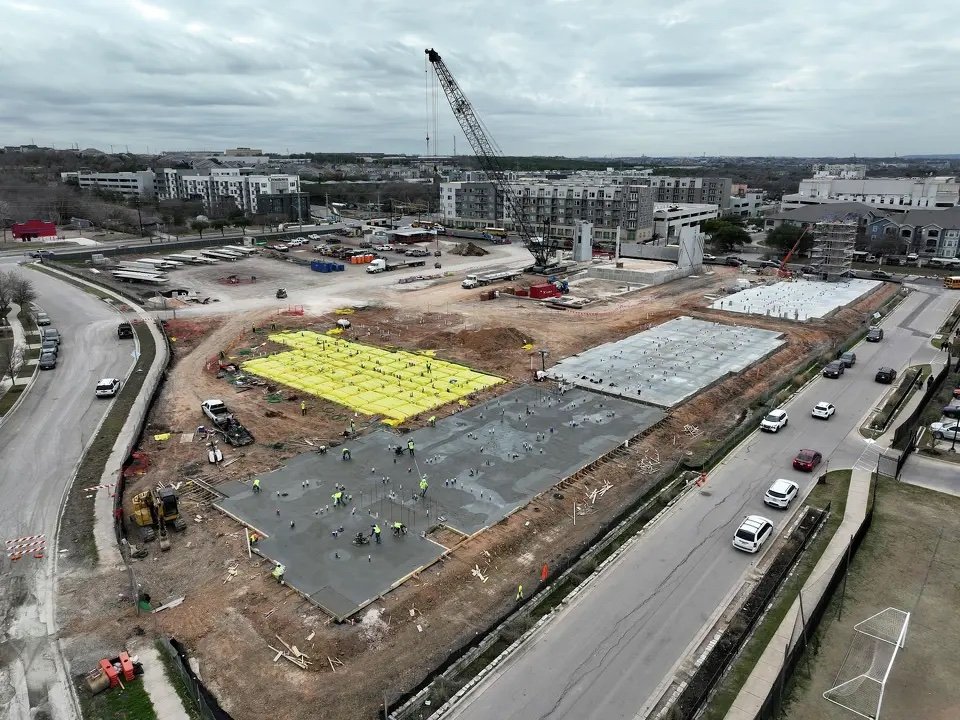
The Grant Construction - East Riverside Austin, TX
The Infrastructure You Can't See
Some of the most impactful constraints existed underground.
Through the Austin Utility Location Coordination Committee (AULCC) process, the project team identified both public and private utility infrastructure along East Riverside Drive, including critical fiber optic lines.
As is often the case, utility records were not always perfectly aligned with field conditions. Yet development could not proceed without accounting for these facilities. Designing around infrastructure with uncertain locations required careful coordination, investigation, and risk management.
A damaged fiber line during construction could have resulted in significant delays and costs.
Identifying those risks early helped protect the project's schedule and budget.
Designing Around a Moving Target
The project also sat directly within the influence area of Project Connect, Austin's future transit expansion program.
At the time of Site Plan review, the final rail design had not yet been completed. However, the development still needed to reserve sufficient space for future transit infrastructure and operational equipment.
This created a unique challenge: designing for infrastructure that had not yet been fully designed.
One notable example involved a proposed rail operations structure that was initially planned directly in front of the project's commercial storefronts. Had it remained in that location, it would have significantly impacted both the pedestrian experience and the long-term viability of the retail environment.
Through coordination and negotiation, the team successfully integrated the required equipment into the building itself, preserving the streetscape and creating a better experience for future residents and visitors.
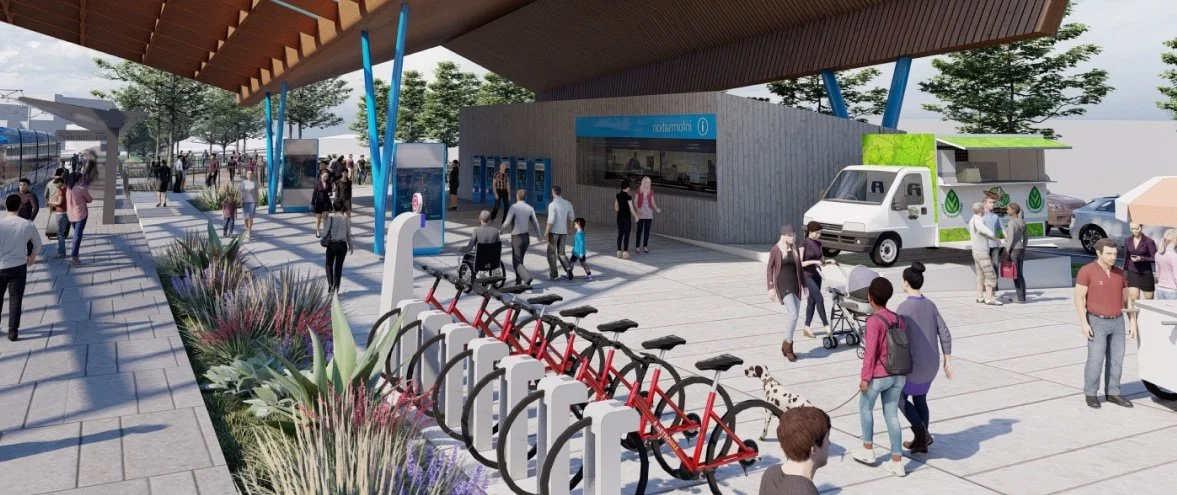
Austin Light Rail - Project Connect
Navigating Changing Regulations
Few project elements proved more challenging than parkland dedication.
At the time the project entered review, the City of Austin could request up to 15% of a site's area be dedicated as parkland. The project team proposed an 11% dedication, but the request was rejected.
Shortly thereafter, the Texas Legislature passed House Bill 1526, limiting required dedication in certain jurisdictions to 10%.
Recognizing the significance of the legislative change, the team strategically withdrew and resubmitted the project under the new regulations. Even then, the interpretation and implementation of the new requirements became a lengthy process involving legal review and agency coordination.
Ultimately, the project was able to move forward under the updated state framework, but not before nearly a year of additional effort.
The experience highlighted an important reality of development: understanding how regulations are evolving can be just as important as understanding current regulations.
Unlocking Opportunity Through Density
Not every constraint creates a challenge. Sometimes constraints create opportunities.
Because of the site's proximity to Project Connect, the development qualified for density bonus programs that allowed increased residential density in exchange for affordable housing commitments.
Working alongside the Housing Authority of the City of Austin (HACA), the project leveraged affordability incentives, density bonuses, and SMART Housing certification to maximize development potential while supporting broader community housing goals.
Successfully utilizing these programs required detailed calculations, additional city approvals, and extensive coordination, but ultimately added significant value to the project.
Even the Airport Had a Role
The site's location near Austin-Bergstrom International Airport introduced another layer of review.
Although not a major obstacle, development within the airport overlay required coordination with airport officials to ensure the proposed project would not interfere with air traffic operations or visibility requirements.
It's a reminder that site constraints often extend well beyond property lines.
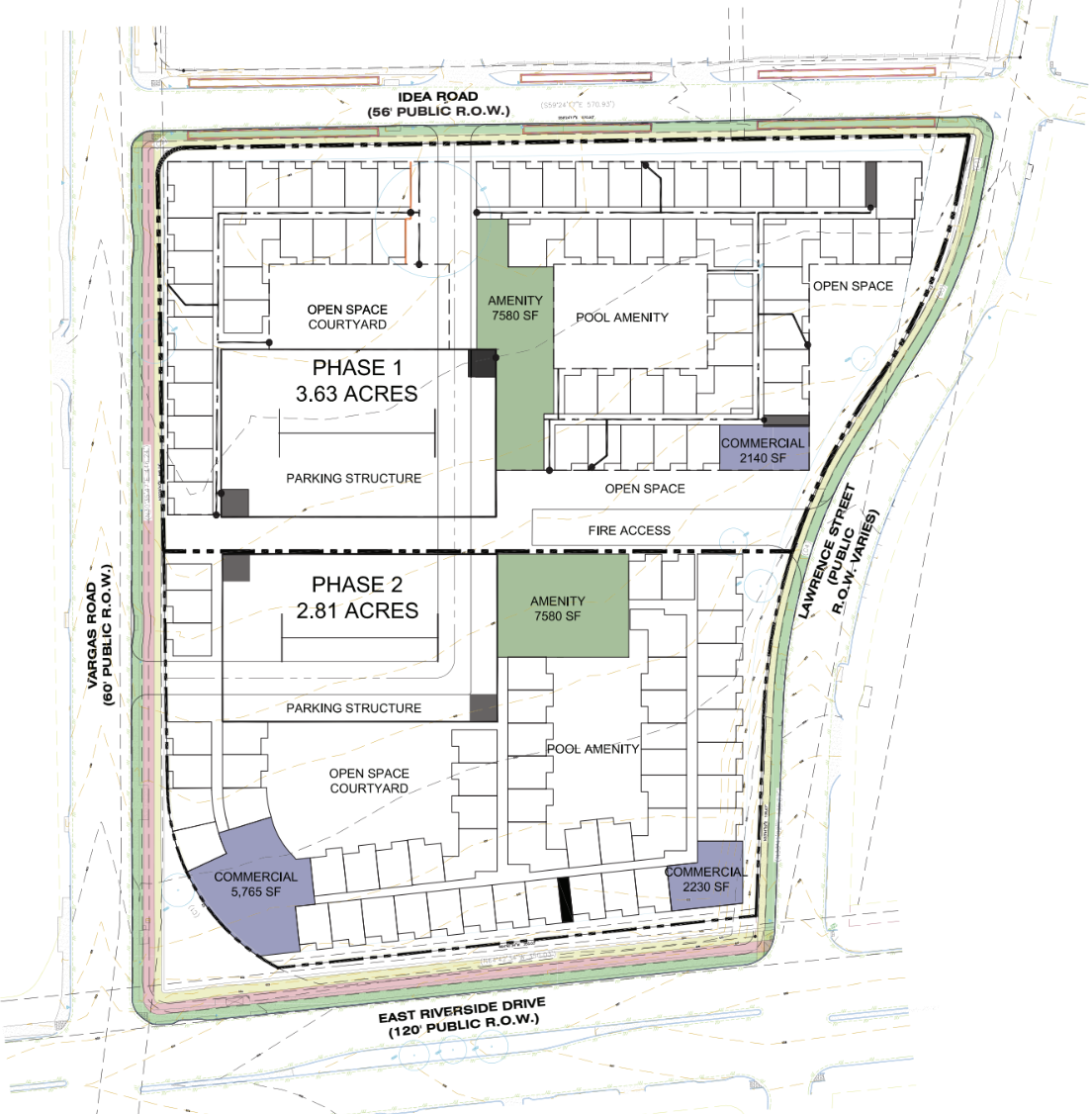
The Grant Site - East Riverside Austin, TX
Why Early Planning Matters
The biggest lesson from this project is that complexity is not always visible.
What initially appeared to be a relatively uncomplicated development site became a case study in entitlement strategy, infrastructure coordination, public agency navigation, and problem-solving.
Successful projects are rarely defined by the absence of constraints. They are defined by how effectively those constraints are identified, understood, and addressed.
At LSI, this is where planning creates value.
By evaluating regulations, infrastructure, public policy, entitlement pathways, and future development conditions early in the process, we help clients uncover risks before they become obstacles and identify opportunities before they are missed.
Because before great places can be designed, someone has to understand everything standing in the way of building them.