
Landscape Architecture is Infrastructure
For decades, infrastructure has been defined by what we can engineer, pour, and pipe: roads, utilities, drainage systems, and buildings. Meanwhile, landscape has been labeled an amenity, something added after the “real” work is done.
That distinction no longer reflects reality.
Today, landscape architecture is performing essential functions once handled exclusively by gray infrastructure. Landscape manages water, mitigates risk, supports mobility, protects public health, and increases long-term resilience. In many cases, it does so more effectively and economically than traditional systems.
Landscape architecture isn’t supplemental, It’s infrastructure.
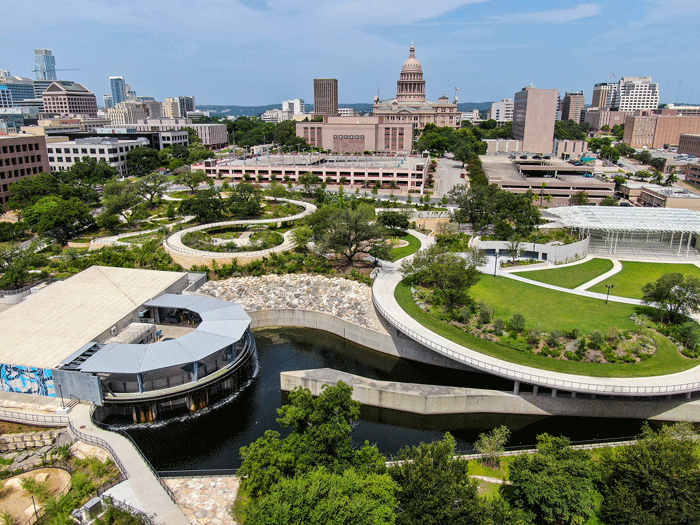
Waterloo Park - Austin, TX
Managing Water Is Infrastructure
One of the clearest examples of landscape as infrastructure is stormwater management. Through grading, bioswales, rain gardens, wetlands, and detention systems, landscape architects design sites to absorb, slow, and filter water naturally.
These systems reduce flooding, improve water quality, and relieve pressure on municipal storm systems. Unlike underground pipes or vaults, they are visible, adaptable, and easier to maintain over time (often at a lower cost).
When a landscape controls runoff and protects downstream infrastructure, it is doing the work of traditional utilities.
Shaping Land to Protect Investment
Grading and earthwork are foundational infrastructure decisions. How land slopes, drains, and holds soil determines whether a project performs or fails.
Landscape architects move land intentionally to protect buildings, roadways, and public space. They design for erosion control, slope stability, accessibility, and long-term durability. These decisions directly affect maintenance costs, lifespan, and liability.
This is risk management at the ground level.
Infrastructure That Supports Mobility
Landscape architecture plays a critical role in how people move through cities and sites. Complete streets, trails, greenways, and pedestrian spaces are transportation infrastructure, all designed to safely move people outside of vehicles.
These systems support alternative transportation, improve safety, and connect communities to jobs, services, and open space. Streetscapes and public rights-of-way designed by landscape architects are not decorative, they are functional mobility networks.

Retail Development Rendering - Austin, TX
Public Health Is Infrastructure
Access to shade, green space, and walkable environments directly affects physical and mental health outcomes. Tree canopy improves air quality and reduces urban heat. Parks and open spaces encourage activity and social connection.
Landscape architecture supports public health in measurable ways: reducing heat stress, improving comfort, and creating environments people can actually use. These benefits lower long-term healthcare costs and improve quality of life at a community scale.
That makes landscape a public health system, not an accessory.
Living Systems That Adapt Over Time
Traditional infrastructure is static. Landscape infrastructure is living and adaptable.
Plants grow, soils regenerate, and ecosystems respond to changing conditions. When designed correctly, landscape systems become more effective over time, not less. They provide redundancy, flexibility, and resilience in the face of climate uncertainty.
This adaptability is increasingly critical as communities face flooding, heat, drought, and extreme weather events.
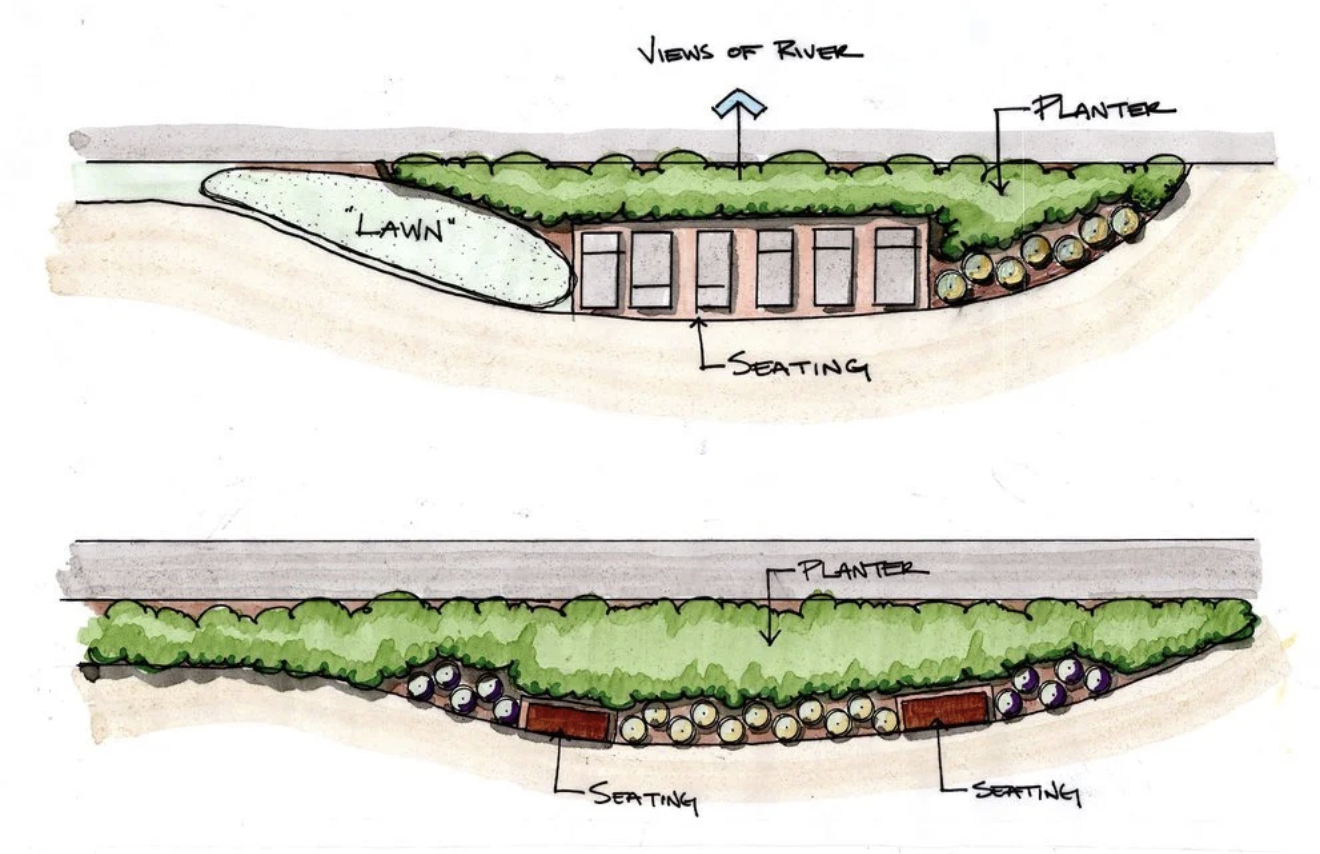
LSI Handsketches for Montopolis Bridge - Austin, TX
Economic Performance and Long-Term Value
Infrastructure is ultimately about return on investment. Landscape architecture delivers value beyond aesthetics by:
Reducing construction and maintenance costs
Extending the lifespan of buildings and hard infrastructure
Increasing property value and marketability
Improving user experience and retention
In many developments, landscape improvements outperform traditional upgrades in speed, cost efficiency, and long-term impact.
A Shift in How We Build
As cities grow and environmental pressures increase, the definition of infrastructure must evolve. Landscape architecture offers a systems-based approach.
The most successful projects today recognize this shift. They treat landscape not as a finishing layer, but as a foundational system.
Landscape architecture is infrastructure you can see, use, and rely on.
And in the future of the built environment, it’s infrastructure we can’t afford to ignore.