
Trees: Worth Protecting, Worth Planning Around
How Early Landscape Decisions Reduce Permitting Risk, Protect Budgets, and Increase Long-Term Value
In Central Texas, trees are not just landscape features. They are regulatory triggers, stormwater infrastructure, shade structures, habitat systems, and long-term property value drivers.
Too often, tree decisions are made late: after site plans are locked and budgets are stretched. By that point, preservation feels restrictive and removal feels easier.
But the truth is this…
Landscape decisions made early reduce downstream risk.
At LSI, we approach tree preservation as a strategic design tool, not a compliance hurdle.
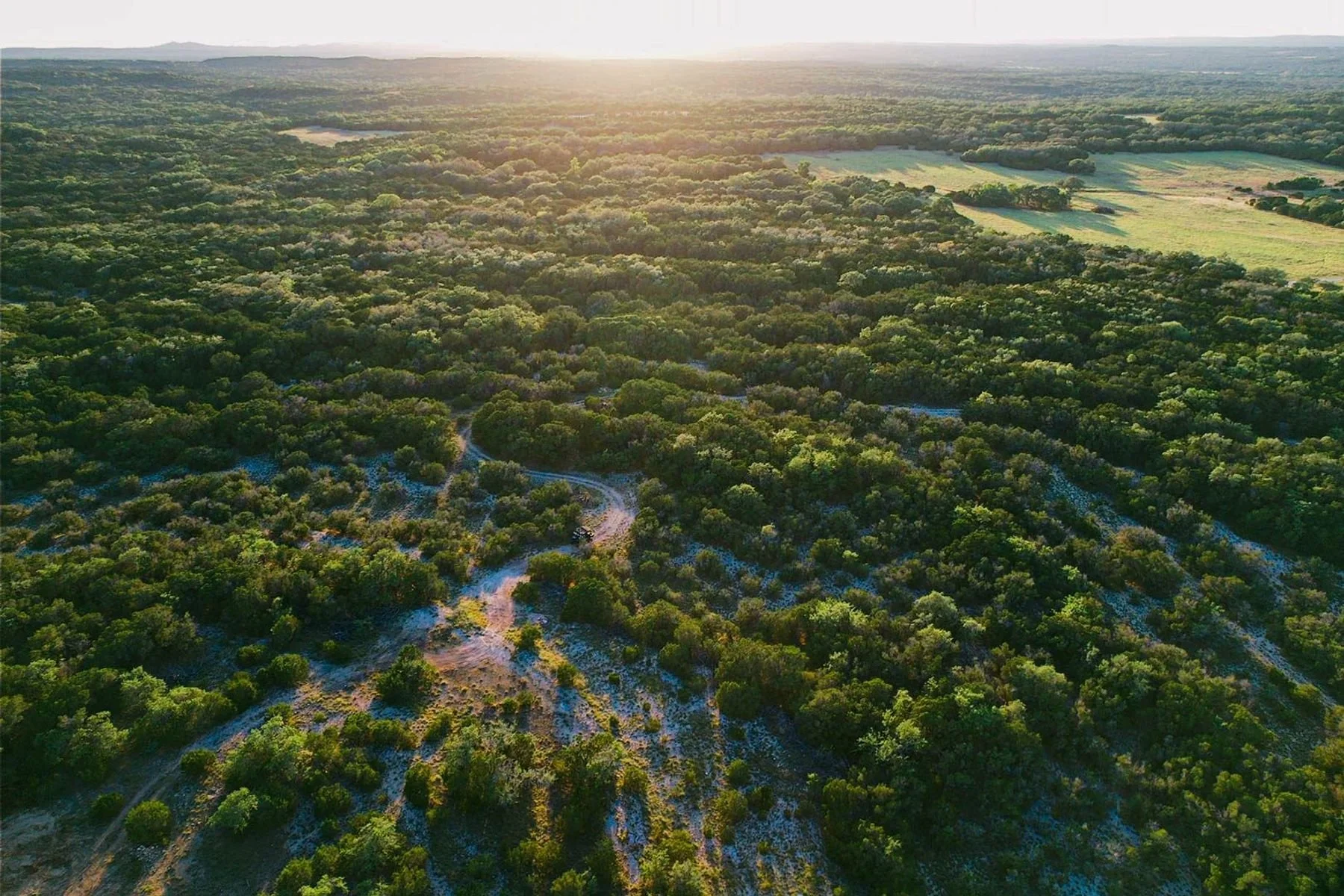
Head Mountain Preserve - Austin, TX
ADA Integration
Tree preservation and ADA are often perceived as conflicting priorities. They don’t have to be.
By studying existing grades early, accessible paths can be routed to work with the terrain instead of cutting aggressively through root systems. Preserving mature trees often reduces the need for retaining walls, excessive fill, and steep transitions.
Smart grading means fewer corrections later.
Stormwater Performance
Mature trees are powerful stormwater assets.
Their root systems:
Increase soil infiltration
Reduce runoff velocity
Stabilize slopes
Improve long-term erosion control
Preserving key tree clusters allows us to maintain natural absorption areas. Instead of over engineering solutions, we integrate the existing canopy into the stormwater strategy.
Less hard infrastructure, more natural performance.
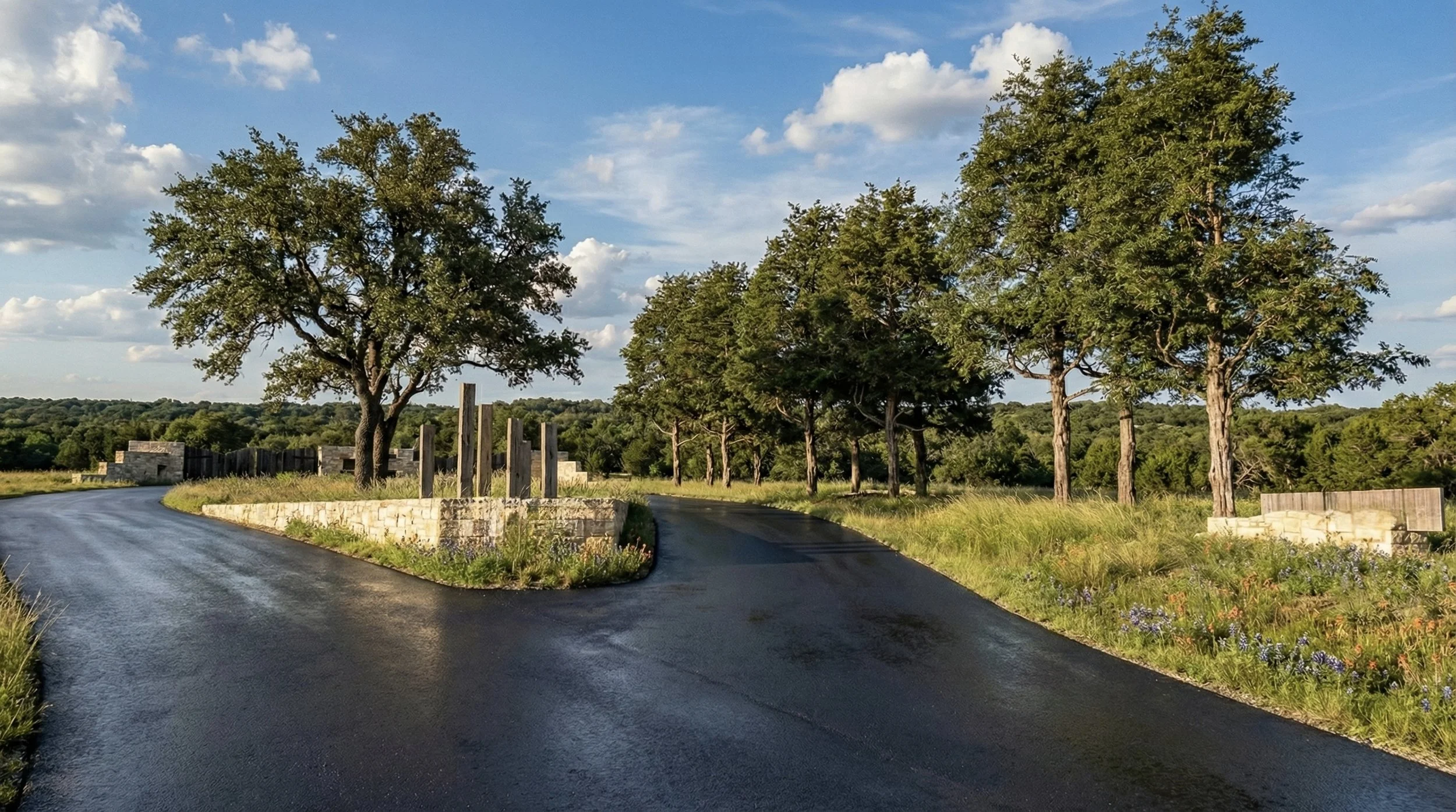
Ranch Entry Signage - Austin, TX
The Financial Reality of Heritage Trees
Heritage and protected trees carry regulatory weight, particularly in the Austin region. Removing them can mean:
Mitigation payments
Replacement planting requirements
Additional irrigation infrastructure
Extended permitting timelines
Designing around them can:
Shorten review cycles
Reduce mitigation fees
Preserve mature shade (which takes decades to recreate)
Increase perceived and real property value
Mature canopy is one of the few site assets that appreciates over time.
When Removal Makes Sense and How to Reuse
There are instances where removal is unavoidable. Safety, health, or site functionality sometimes require it.
But even then, material can often be reused:
Reclaimed wood for site features
Habitat logs
Natural seating elements
Erosion control applications
Tree reuse reinforces sustainability goals while reducing disposal costs and adding character that new materials cannot replicate. The key is intentional planning, not reactive removal.
Climate Response & Long-Term Maintenance
In Texas, climate resilience matters.
Mature trees:
Reduce urban heat island effect
Lower surface temperatures
Provide wind buffering
Reduce irrigation demand beneath canopy zones
From a maintenance standpoint, preserving established trees often costs less over time than installing new plant material that requires years of intensive care.
Long-term operational savings start with early design alignment.
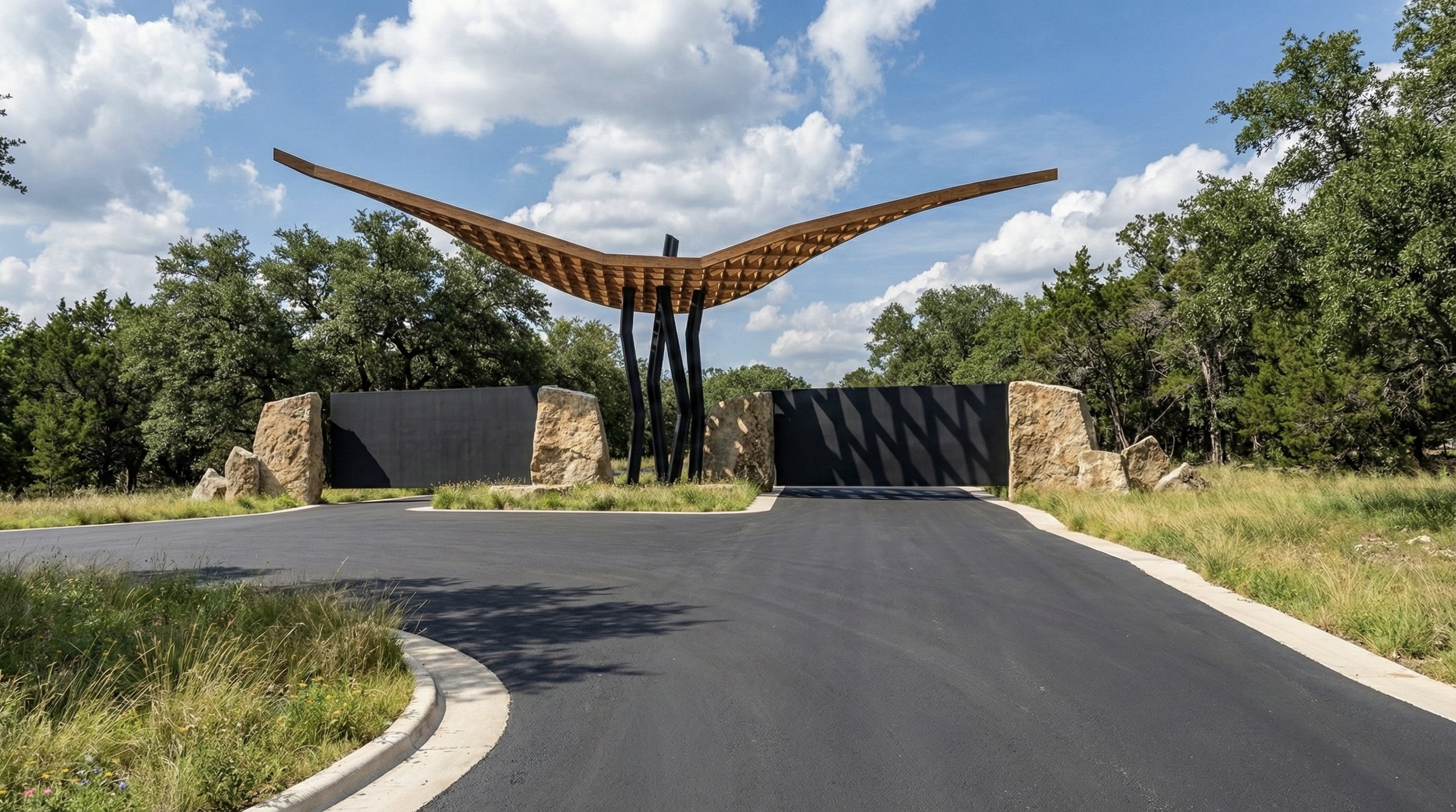
Ranch Signage Entrance - Austin, TX
The Bigger Picture: Early Decisions Protect Projects
Tree preservation is rarely just about trees.
It touches:
Permitting
Stormwater engineering
ADA compliance
Construction phasing
Long-term maintenance
Property value
When landscape strategy is introduced after architecture is locked, options narrow and costs increase.
When landscape strategy leads early site planning, constraints become structure and not setbacks.
At Headmountain Ranch, working with the land, and its trees, resulted in a more resilient, compliant, and valuable outcome.